By Mira Zylali
Solidagos have been in the news of late, with the release of results of a recent research study from the Mt. Cuba Center in Delaware comparing dozens of goldenrod species (available here). The news is good: You don’t have to be afraid to plant goldenrods, an essential native plant with a (sometimes) unfair reputation as an aggressive spreader! As always, the key to planting goldenrods without regret is making informed selections that fit your site and planting goals. The detailed information from Mt. Cuba, which is geared to Mid-Atlantic gardens, can help you do just that!
The scientific name for the genus, Solidago, comes from a Latin word meaning “to heal or strengthen” – which, when given the chance, it can do for your local ecosystem!
Even more fitting is that, far from being a cause of hay fever (that’s ragweed), goldenrod can be a low-maintenance and highly rewarding addition to your garden. Goldenrods support more than 100 different species of caterpillars, including the amazing Wavy-lined Camouflaged Looper, which uses petals from the goldenrod to disguise itself from predators. Goldenrods also help support many species of specialist native bees.
Although the Mt. Cuba flipbook focuses on the success of a nativar called ‘Fireworks’, the Richmond, Virginia area is home to several straight species of Solidago that are suitable for home gardens–Solidago caesia, Solidago rugosa, Solidago odora, Solidago nemoralis, and more. The Virginia-ecotype rough-stemmed, or wrinkle-leaf goldenrod (S. Rugosa) mentioned in the Mt. Cuba flipbook is described as being rhizomatic, but it is not an aggressive spreader.
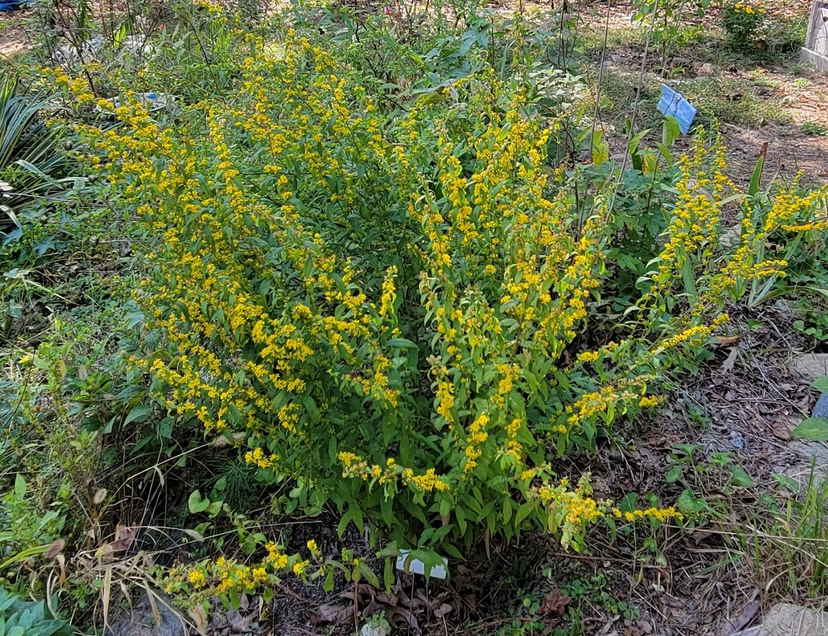
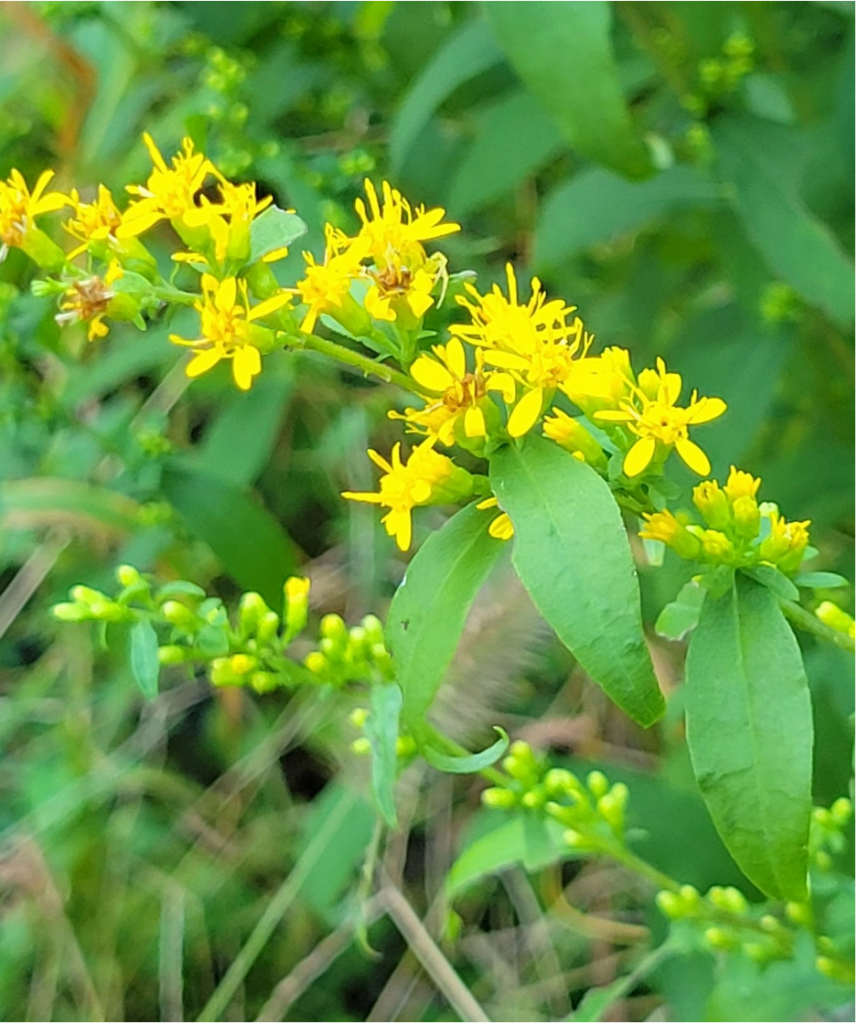
Some Solidago species will grow tall (6’-7’ in the right conditions), and many goldenrods are best suited for meadow-style gardens–but others are more compact and can be quite well-behaved. The photos pictured in this article are of S. caesia.
What conditions suit goldenrods? They’ll be happy in full sun to partial shade, planted alongside companion plants like asters or grasses like Little Bluestem, and they should be fine in most dry-to-average soil (with no worries about extra watering once established). The majority of goldenrod species on Mt. Cuba’s chart have their peak bloom in mid to late September, making these plants an important food source for late-season pollinators.
Over the three years of the trial, the Mt. Cuba team observed over 20,000 insect species visiting goldenrod, making the plant a high-value species for anyone passionate about ecology.